EN
EN

What are you looking for?

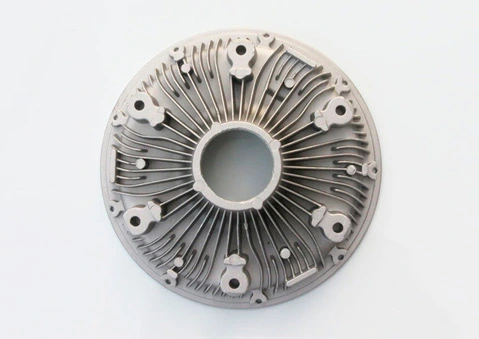
Total manufacturing cost is rarely decided by the part price alone. It is shaped by scrap rate, machining time, tool life, surface finishing, assembly complexity, and warranty risk. In many industries, metal die casting — especially aluminium pressure casting — reduces overall cost by enabling near-net shapes, high repeatability, and multi-feature integration in one shot. This guide explains how alloy selection affects casting performance and what to consider when designing for cost-efficient aluminum pressure die casting.
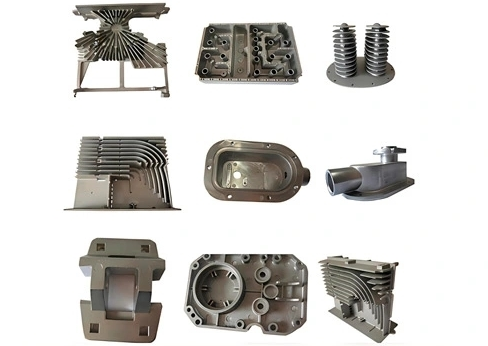
The word "aluminum" covers dozens of alloy compositions, each with different casting characteristics, mechanical properties, and downstream behavior. Selecting the wrong alloy for the application is one of the most common and most expensive mistakes in a die casting program.
| Alloy Property | Effect on Casting Cost | Effect on Part Performance |
|---|---|---|
| Fluidity | Higher fluidity fills thin sections and complex geometry cleanly; reduces misruns and scrap | Determines what wall thickness and feature complexity is achievable |
| Solidification shrinkage | Higher shrinkage increases porosity and dimensional variation risk | Affects dimensional tolerance and leak-tightness |
| Die soldering tendency | Some alloys stick to die steel — accelerating die wear and increasing release agent consumption | Affects tool life and cycle time |
| Machinability | Brittle or hard alloys increase cutting tool consumption and reduce surface finish quality | Affects secondary operation cost |
| Corrosion resistance | Higher alloy content improves corrosion behavior in aggressive environments | Determines finishing requirements |
| Alloy | Strengths | Typical Application | Cost Consideration |
|---|---|---|---|
| A380 | Excellent fluidity and castability; good strength | General structural and housing parts | Low scrap rate; good tool life |
| ADC12 (similar to 383) | Good castability; slightly better machining than A380 | Automotive and electronics housings | Common in Asian supply chains; cost-competitive |
| A360 | Better corrosion resistance; higher ductility | Outdoor and marine-adjacent applications | Slightly higher cost; better finish response |
| A413 | Excellent pressure tightness; very high fluidity | Hydraulic bodies; leak-critical parts | Premium for tightness-critical applications |
The economic case for aluminium pressure casting over machining from billet or alternative manufacturing methods rests primarily on feature integration — the ability to produce multiple functional features in one operation.
| Integrated Feature | Manufacturing Equivalent Without Casting | Cost Eliminated |
|---|---|---|
| Ribs and gussets | Machined or welded stiffeners | Machining time; assembly operation |
| Mounting bosses and pads | Drilled and tapped from billet or welded pads | Drilling and tapping operation |
| Internal channels | Gun-drilled passages or welded tube inserts | Multi-operation machining; welding; leak test risk |
| Snap features and living hinges (where geometry allows) | Separate plastic component and assembly step | Component cost; assembly labor |
| Bearing bores (semi-finished) | Fully machined from solid | Rough bore formed in cast; only finish bore required |
A die casting that replaces four separate machined components reduces: four purchase orders, four piece prices, four sets of incoming inspection, assembly fixtures, fasteners, and labor. The casting costs more than one of those machined parts in isolation — but less than all four combined, with better dimensional consistency between the features.
Uniform wall thickness: varying wall thickness creates differential solidification that drives porosity and distortion — both increase scrap and rework cost
Adequate draft angles: 1–3° minimum on external walls; more on deep features — insufficient draft causes die wear, surface drag marks, and ejection damage
Generous fillets at transitions: sharp internal corners are stress concentrations in the casting and in the die — fillets improve fatigue life and reduce die cracking
Gate and runner position: determined by the casting supplier based on fill simulation — a DFM review before tooling locks the correct strategy
| Requirement | Relevant Alloy Property | Design Response |
|---|---|---|
| High strength at room temperature | Yield and tensile strength of the alloy | Select A380 or equivalent; consider T5 heat treat for specific alloys |
| Impact and shock resistance | Elongation at break — higher is more ductile | A360 or A413 preferred over A380 in impact-critical applications |
| Elevated temperature service | High-temperature strength retention | Some alloys lose strength above 150°C — confirm for engine-adjacent parts |
| Fatigue resistance | Porosity level is the primary driver | Porosity control and sound casting process are more important than alloy |
Aluminum naturally forms a protective oxide layer, but die cast aluminum is not uniformly corrosion-resistant across all environments:
Salt spray and coastal environments: A360 alloys offer better intrinsic corrosion resistance; consider chromate conversion or powder coat for structural reliability
Chemical and cleaning agent exposure: confirm the specific chemical compatibility with the alloy — alkaline cleaners can attack aluminum surfaces rapidly
Galvanic coupling: aluminum in contact with steel fasteners in wet environments will experience galvanic corrosion — isolate with coatings, sealants, or non-metallic spacers
| Finishing Method | Alloy Compatibility | Application |
|---|---|---|
| Powder coating | All common die cast alloys with correct pretreatment | General industrial and architectural parts |
| Anodizing | Best on alloys with lower silicon content — A360 anodizes better than A380 | Appearance and wear resistance where anodize quality is critical |
| Painting | All alloys with appropriate primer | Automotive and consumer products |
| E-coat | Commonly used in automotive supply chains | Corrosion protection on complex geometry |
Porosity — voids within the casting caused by trapped gas, shrinkage, or poor fill — is the quality issue that most directly affects downstream cost and performance.
| Porosity Effect | Application Consequence | Cost Impact |
|---|---|---|
| Leak paths through the casting wall | Hydraulic bodies, coolant channels, or pressure vessels fail in use | Warranty claims; impregnation required |
| Reduced fatigue life | Cyclic-loaded structural parts fail earlier than designed | Safety risk; field replacement program |
| Plating and finishing adhesion failure | Porosity under a plated or coated surface creates blisters and peel | Scrap at finishing stage; rework cost |
| Machined surfaces with pits | Porosity exposed at a machined surface is visible and may be a cosmetic rejection | Scrap rate at machining |
Melt cleanliness: degassing treatment removes dissolved hydrogen before shot — the most significant single control
Die temperature management: consistent die temperature reduces thermal variation that drives shrinkage porosity
Shot profile: slow shot to fill the gate and runner without turbulence; fast shot to fill the cavity before premature solidification
Venting and vacuum: adequate die venting removes displaced air; vacuum-assisted die casting (where used) reduces gas porosity significantly
For production parts entering safety-critical or leak-critical applications:
CT or X-ray sampling: confirms internal porosity level against the agreed acceptance standard before production release
Leak test: pressure or vacuum decay test on 100% of parts or on a defined AQL sample
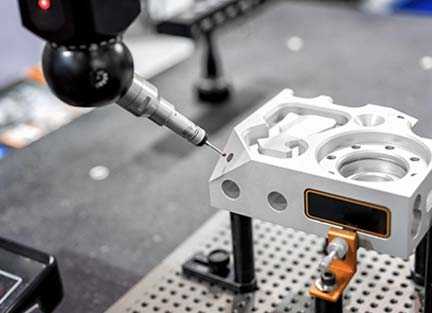
CMM first article: confirms critical dimensions are achievable in production before the full production run begins
PPAP or equivalent: dimensional and process capability documentation confirming the process is stable before volume production
| Item | What to Include | Why Required |
|---|---|---|
| CAD drawing or 3D file | With GD&T tolerances and critical dimension callouts | Defines what the casting must achieve |
| Annual volume | Parts per year and expected program life | Drives tooling amortization and price tier |
| Target part weight | In kg — estimated or from CAD | Confirms material cost estimate |
| Alloy requirement | If specified; or application description if alloy is open | Allows supplier to recommend and DFM |
| Machining scope | Which surfaces require machining and to what tolerance | Defines whether secondary machining is in or out of scope |
| Finishing requirement | Paint, powder coat, anodize, bare | Affects alloy selection and adds cost |
| Functional requirements | Leak rate, strength, operating environment | Required for alloy and process confirmation |
Alloy recommendation with justification based on the application requirements — not just the lowest-cost option
DFM feedback with specific recommended changes to wall thickness, draft, or feature geometry to improve yield
Tooling plan showing number of cavities, projected tool life, and maintenance schedule
Yield assumption: what scrap rate is the supplier assuming in the quoted price, and what happens when scrap exceeds that assumption?
Secondary operations scope: which machining, finishing, and inspection operations are included in the quotation and which are excluded?
Prototype strategy: confirm whether aluminium pressure casting tooling is appropriate at prototype stage or whether a machined prototype is a better first step for design validation
First-article inspection: dimensional and material certification on the first production parts before volume delivery begins
Process capability targets: Cpk greater than 1.33 on critical dimensions as a condition of production approval
Choosing the right alloy is one of the most practical levers to reduce total cost in metal die casting. With aluminium pressure casting, the best alloy is the one that casts cleanly for your geometry, supports your strength and corrosion requirements, and minimizes the secondary operations that add cost after the casting leaves the die. A supplier-led DFM review before tooling begins typically delivers the largest savings — because changes are cheap at the design stage and expensive after the die is cut.
Q1: Why does alloy selection matter so much in aluminium pressure casting?
Different aluminum alloys have very different fluidity, shrinkage behavior, die soldering tendency, corrosion resistance, and machinability. The wrong alloy can increase scrap rate, accelerate die wear, make machining more expensive, or require additional surface protection that a better alloy choice would have made unnecessary. Alloy selection is a system-level decision that affects every downstream cost, not just the raw material cost.
Q2: How does metal die casting reduce manufacturing cost compared to machining from billet?
Die casting creates near-net shapes with integrated features — ribs, bosses, channels, and mounting surfaces — in a single operation. Machining from billet requires removing all of that material as chips, which takes time and creates waste. Die casting also consolidates multiple machined or assembled components into one casting, eliminating the piece cost, assembly labor, and fasteners that the separate parts would have required.
Q3: What causes porosity in aluminum die cast parts?
The primary causes are dissolved hydrogen in the melt (removed by degassing treatment), trapped air from turbulent fill (managed by shot profile and venting), and shrinkage voids from differential solidification (reduced by die temperature management and alloy selection). Porosity is a process control outcome — it is minimized by melt quality, die design, and consistent shot parameters.
Q4: Can aluminum die cast parts be made leak-tight?
Yes. Leak-tightness depends on the alloy (A413 and similar high-fluidity alloys are specifically used for hydraulic and pressure-tight applications), the die design (venting and vacuum assistance reduce gas porosity), and the shot parameters. For critical applications, 100% leak testing is standard, and impregnation — a process that fills micro-porosity with a sealant under vacuum — is used when the casting process alone cannot achieve the required tightness.
Q5: What information should I provide to get an accurate aluminium pressure casting quotation?
Provide a 3D CAD file and 2D drawing with critical tolerances and GD&T callouts, the target annual volume and program life, the alloy requirement or application description if alloy is not specified, the machining scope (which surfaces require machining and to what tolerance), the finishing requirement, and any functional performance requirements such as leak rate, operating temperature, or mechanical load specification.