EN
EN

What are you looking for?

In today's competitive landscape, speed is not just an advantage; it’s a necessity. The journey from a brilliant idea captured in a CAD model to a physical part you can hold, test, and validate is one of the most critical phases in product development. Shortening this phase means faster innovation, quicker market entry, and a significant edge over the competition. This is precisely where Rapid CNC Machining becomes a strategic asset.
While many associate "rapid" with 3D printing, we at Essai Group know that for functional prototypes and low-volume production, the speed, precision, and material reality of CNC machining is often unmatched. It’s not just about making a part quickly; it’s about making the right part quickly, with the properties and accuracy needed for meaningful testing.

When engineers hear "Rapid CNC Machining," it’s easy to think it just means the machine's spindle moves faster. In reality, the "rapid" aspect encompasses the entire workflow, which we have optimized for maximum efficiency. It’s a holistic approach to speed that includes:
Rapid Quoting & Analysis: Our systems are designed to quickly process your CAD files and provide a quote in hours, not days. We simultaneously perform a Design for Manufacturability (DFM) analysis to identify any potential issues before a single chip is cut.
Accelerated Programming: Our experienced programmers use advanced CAM software to quickly generate the optimal toolpaths, minimizing machine setup and cycle times.
On-Demand Material Sourcing: We maintain a ready inventory of common engineering materials—from various grades of aluminum and steel to plastics like ABS and PEEK—eliminating procurement delays.
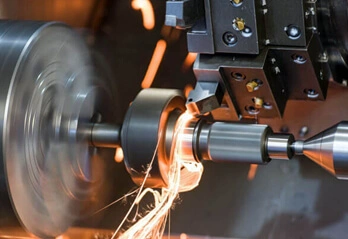
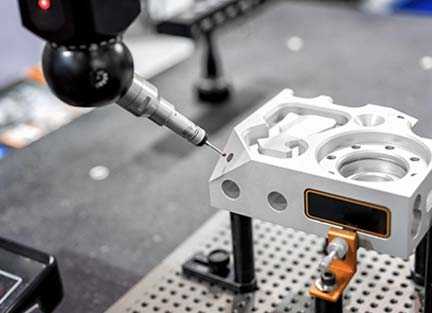
Efficient Production: By leveraging high-speed 3-axis and 5-axis CNC machines, we can produce complex geometries with minimal setups, drastically reducing the time from raw stock to finished part.
The result is a workflow where your component can be in your hands in a matter of days.
This is perhaps the single greatest advantage of using CNC for rapid prototyping. While other methods are excellent for verifying form and fit, CNC machining and manufacturing allow you to create prototypes from the exact same material as your final production part. This is a game-changer because it enables true functional testing. You can:
Verify Mechanical Strength: Test the prototype under real-world loads and stresses.
Assess Thermal Properties: Understand how the part behaves under heat.
Confirm Chemical Resistance: Ensure the material holds up in its intended environment.
Evaluate Surface Finish: Achieve a production-quality finish for aesthetic reviews or fluid dynamic testing.
Testing a prototype made from a proxy material gives you an estimate. Testing a CNC-machined prototype gives you concrete data.
<td align="left" style="--tw-border-spacing-x: 0; --tw-border-spacing-y: 0; --tw-translate-x:
| Method | Material Options | Typical Tolerance | Best For... |
|---|---|---|---|